Relocating to Miami? What Luxury Home Buyers Should Know Before Designing the Home
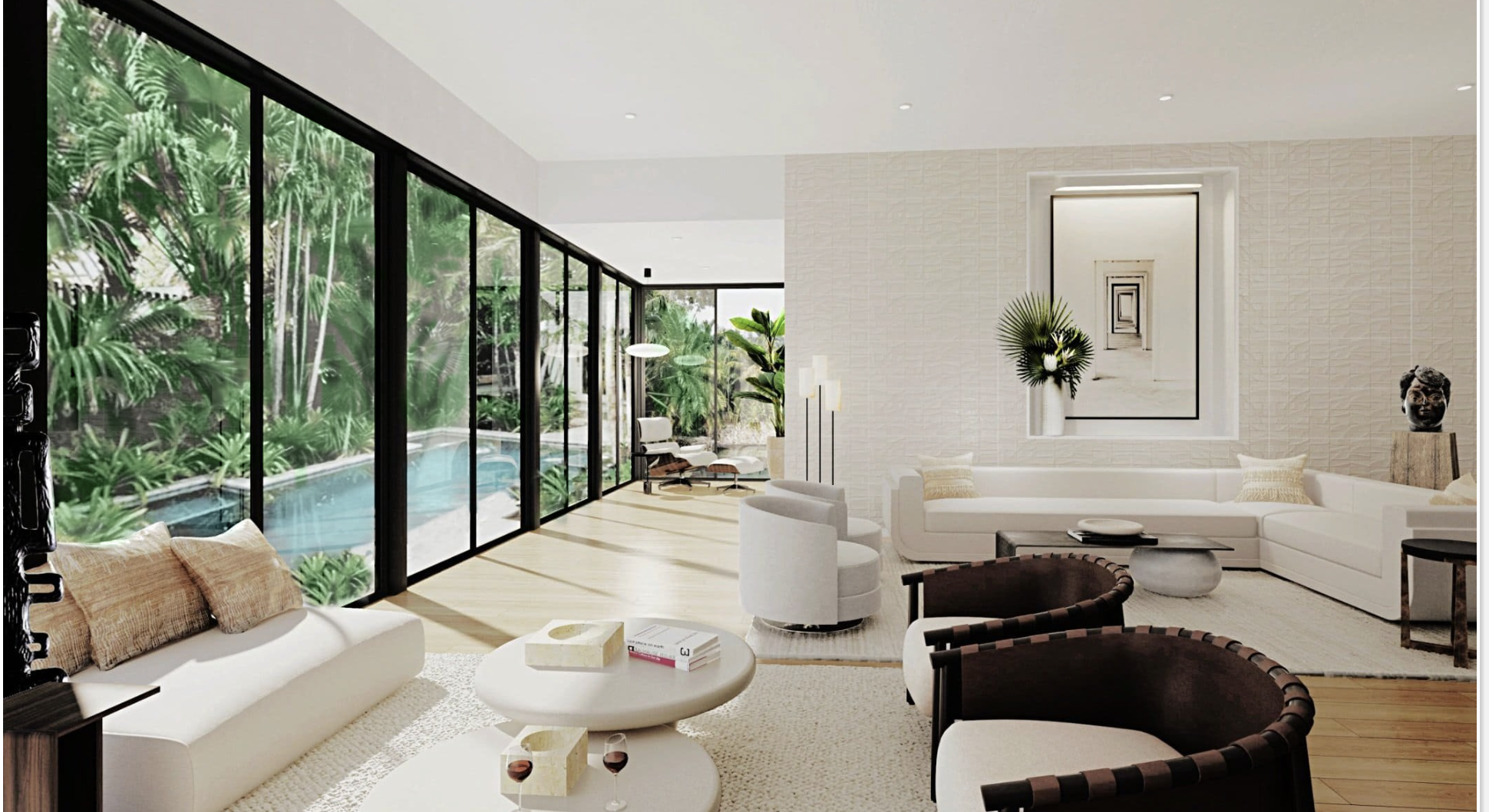
An organic coastal contemporary interior design for a large open living room is finished with an ivory, geometric, 3D tiled wall and designer furnishings.
Relocating to Miami is not only about buying the right property. It is about understanding how that property needs to live, function, perform, and be completed for the Miami lifestyle.
A buyer moving from New York, California, Chicago, the Northeast, or another country may find the right condo, waterfront residence, vacation home, or investment property and assume the hardest part is over.
In reality, the purchase is only the beginning.
Miami living brings a very specific set of design considerations: climate, light, humidity, salt air, building rules, insurance concerns, remodeling approvals, furniture lead times, delivery coordination, window treatments, outdoor living, guest use, seasonal occupancy, and move-in readiness.
A Miami home should not only be beautiful. It should be ready for the way Miami is lived.
Miami Living Is Different From Other Markets
A home in Miami lives differently than a home in Manhattan, Los Angeles, Boston, Chicago, or abroad.
The light is brighter. The humidity is higher. The sun is stronger. Waterfront exposure, balcony use, indoor-outdoor living, guest traffic, seasonal use, and maintenance needs all affect how a home should be designed.
That matters when selecting furnishings, fabrics, window treatments, flooring, outdoor furniture, lighting, rugs, wall coverings, and finishes.
A beautiful fabric that works in a dry climate may not perform the same way in South Florida. Metal finishes may react differently near salt air. Outdoor furniture must be selected with durability, sun exposure, rain, humidity, and maintenance in mind. Window treatments are not simply decorative; they may be needed for privacy, glare control, heat reduction, blackout needs, and protection from the intensity of Miami sun.
Relocation design is not just furnishing.
It is lifestyle translation.
Luxury Condo Buyers Need More Than a Pretty View
For many Miami buyers, the dream begins with a view: Biscayne Bay, the ocean, the skyline, the Intracoastal, or a high-floor terrace.
But in a luxury condo, the building matters as much as the unit.
Before planning a remodel or full-home furnishing project, buyers should understand the building’s rules, delivery procedures, elevator access, contractor insurance requirements, renovation restrictions, noise rules, work hours, approval process, short-term rental policy, and move-in requirements.
A design plan that does not consider the building can run into avoidable delays.
Condo projects may require association approval before work begins. Deliveries may need to be scheduled in advance. Installers may need insurance certificates. Some buildings limit construction hours. Some restrict flooring changes, plumbing work, wall penetrations, balcony furnishings, window treatments, or renovation timing.
A relocation buyer who wants the home completed quickly should understand these conditions before assuming the project can begin immediately after an interior design or home remodeling project.
Move-in ready does not happen by accident.
Flood Zones, Storm Planning, and Insurance Should Be Understood Early
Miami buyers should understand the difference between buying a beautiful property and understanding the practical responsibilities that come with that property.
Flood-zone information, storm-surge planning, insurance, building rules, elevation, balcony exposure, window systems, and maintenance should be reviewed with the proper real estate, insurance, legal, and building professionals.
This is not meant to discourage a buyer.
It is meant to help the buyer plan intelligently.
These issues can affect insurance costs, renovation decisions, material selections, outdoor furniture choices, storage planning, generator conversations, storm preparation, and long-term ownership expectations.
A well-designed Miami home should consider beauty, durability, comfort, and practical living.
Remodeling May Take Longer Than Buyers Expect
Many relocation buyers want the home ready immediately after closing. That is understandable, especially if they are moving from another city, preparing a seasonal residence, or purchasing an investment property.
But if the property needs remodeling, the timeline may be very different from a simple decorating project.
A remodel may involve licensed architectural drawings, condo approval, contractor estimates, permitting, plumbing, electrical work, mechanical updates, demolition, inspections, revisions, flooring, kitchen changes, bathroom updates, lighting adjustments, and final sign-offs.
Those steps take time.
If the buyer wants to remove walls, change ceilings, update bathrooms, redesign a kitchen, change lighting, add built-ins, replace flooring, or relocate plumbing or electrical, those decisions should be planned before construction begins.
The biggest mistake is rushing into work without a complete design direction.
A remodel should be design-led, not panic-led.
Furnishing a Miami Home Is Not Instant
Even if a property does not need major remodeling, furnishing a Miami home still requires time.
Furniture, rugs, lighting, window treatments, wallpaper, custom pieces, outdoor furnishings, art, accessories, delivery, installation, and final styling all have their own timelines.
An item may appear “in stock,” but that does not always mean it can be installed immediately. It may be located in another state. It may require freight delivery. It may need warehouse processing. It may arrive damaged. It may need assembly. It may need to be exchanged or replaced.
Custom window treatments, special-order furniture, imported pieces, performance fabrics, wall coverings, and made-to-order items may take longer.
A relocation buyer should not assume an empty home can become fully finished in a few weeks unless the scope is extremely limited and the selections are readily available.
The right design plan helps a relocation buyer move from purchase to livable home with fewer surprises.
Seasonal Residents Need a Different Kind of Planning
Many Miami homeowners are not in the property full-time.
Some are seasonal residents. Some split time between Miami and another city. Some purchase a vacation home. Some want the residence ready before winter season. Some want the property guest-ready before family arrives.
That changes the design strategy.
A seasonal home needs to be easy to maintain, comfortable to use, durable enough for guests, and complete enough that the owner can arrive without managing endless unfinished details.
This often means planning for:
durable fabrics
practical storage
window treatments
guest bedrooms
outdoor furniture
lighting
bedding
kitchen essentials
art and accessories
final installation
household readiness
A beautiful room is not enough if the home is not ready to live in.
Investment Properties and Vacation Rentals Need Experience, Not Just Furniture
If the property will be used as a rental, Airbnb, VRBO, or part-time vacation home, the design strategy should be different from a personal residence.
The home has to look beautiful, but it also has to perform.
Guests need comfort, function, durability, storage, lighting, strong first impressions, easy maintenance, and a memorable experience. The property should not feel like a generic hotel room or a collection of leftover furniture.
It should feel intentional.
For investors, the design has to support the financial purpose of the property. A stronger interior can help the property stand out in a competitive rental market. The goal is to create an experience guests remember, photograph, recommend, and want to return to.
That does not mean every item must be the most expensive.
It means the design should be strategic.
Buyers Should Understand Taxes, Homestead, and Rental Use
A relocation buyer should also understand that design decisions are only one part of the move.
If the property will become a primary residence, the buyer should speak with the proper tax and legal advisors about homestead eligibility, residency, timing, and ownership structure. If the property will be rented, the buyer should understand how rental use may affect tax benefits, insurance, building rules, and long-term planning.
This is not interior design advice, but it does affect relocation planning.
A buyer should know whether the home is being designed as a primary residence, seasonal residence, guest residence, investment property, or short-term rental. Each use has different priorities.
The clearer the purpose, the stronger the design plan.
What Relocation Buyers Should Plan Before Moving
Before relocating to Miami, buyers should consider:
Will this be a full-time residence, seasonal home, or investment property?
Does the home need remodeling before furnishing?
Are condo or building approvals required?
Are permits needed?
What are the building delivery rules?
Are window treatments needed immediately?
Does the home need outdoor furniture?
Are materials appropriate for humidity, sun, and salt air?
What rooms need to be move-in ready first?
What can wait?
Are there guests, renters, or family members to consider?
What is the realistic timeline for furnishings, delivery, and installation?
Is the budget based on real Miami-market costs?
These questions protect the client before money is spent.
The Right Design Plan Makes Relocation Easier
Relocating to Miami should feel exciting, not overwhelming.
But without a plan, the process can become fragmented quickly. The buyer may be managing furniture orders from another state, coordinating deliveries with a building, trying to understand condo rules, waiting for window treatments, handling damaged items, dealing with contractors, or realizing too late that the home is not ready for the way they intended to use it.
A professional design process helps bring order to those moving parts.
The goal is not only to create a beautiful interior.
The goal is to create a home that supports the buyer’s life in Miami from the moment they arrive.
How Exclusively To Design Solves This
At Exclusively To Design, we help relocation buyers, seasonal residents, investors, and luxury homeowners turn a new Miami property into a home that is functional, personal, climate-conscious, and move-in ready.
From interior design and interior decorating to remodeling priorities, furnishings, window treatments, lighting, installation, and final setup, our process helps clients understand what the property needs before costly decisions are made.
Explore our portfolio to see Miami interiors shaped for real living, guest experience, and lifestyle, or contact us to schedule a consultation for your relocation project.