Before You Close: What to Check in a New Condo or Renovated Home
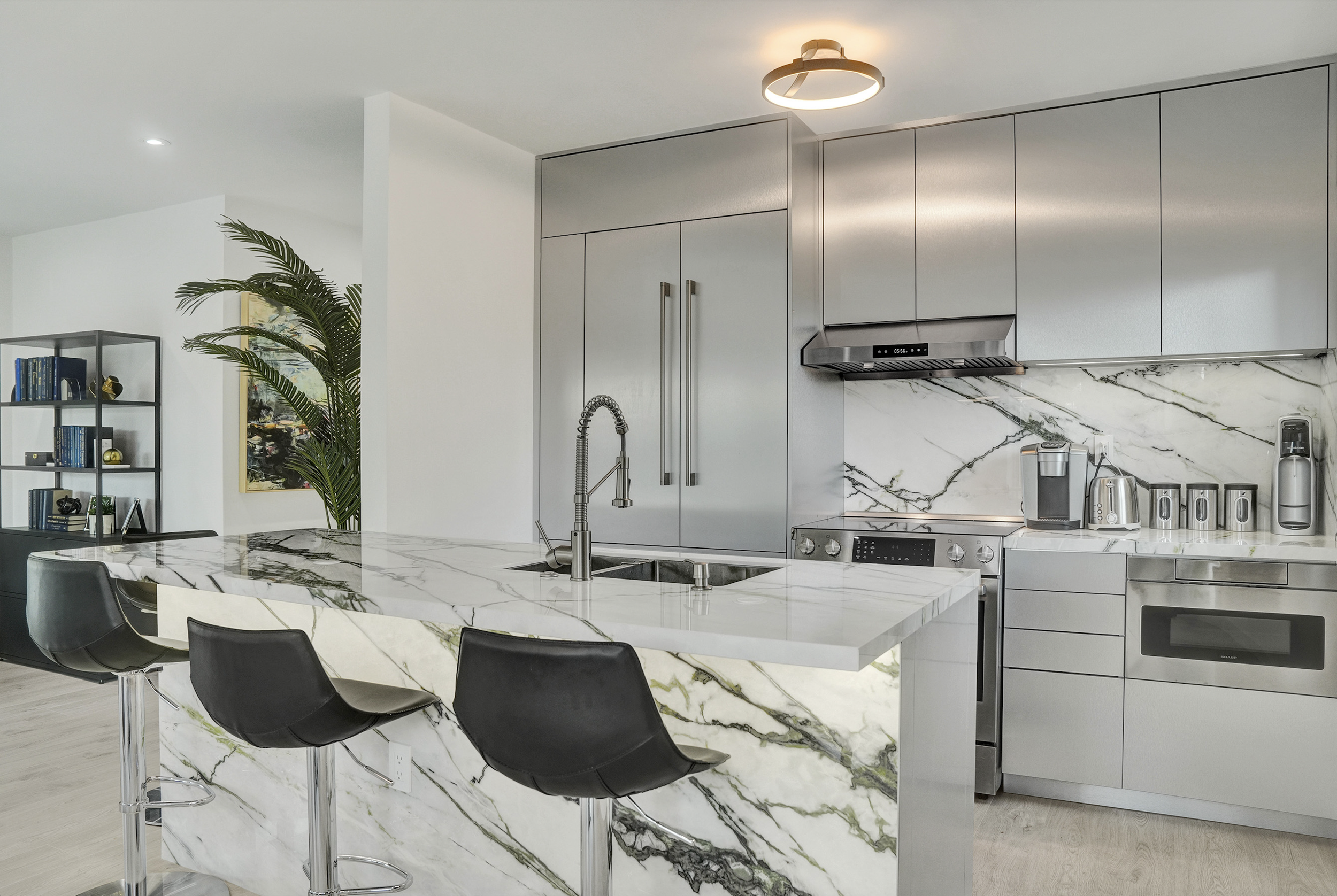
A modern renovated stainless steel condo kitchen with Green Calacatta porcelain island, integrated appliances, and interior design by Exclusively To Design.
Before You Close: A Beautiful Home Can Still Be Incomplete
One of the easiest mistakes a buyer can make is assuming that a home which looks finished is fully complete.
A new condo or newly renovated residence may present a beautiful interior design at first glance. The layout may be attractive. The finishes may feel current. The kitchen and bathrooms may look perfect for you and your family. The kitchen may photograph well. But the appearance of completion is not always the same thing as actual completion.
This matters in every market, but especially in Miami and South Florida, where presentation often carries strong emotional power in the sales process.
A home can sell the dream before the function has been fully examined.
The expensive problems are often the quiet ones
Not every costly post-closing problem announces itself immediately.
Some of the most frustrating issues are the smaller omissions buried inside finished spaces. A bathroom may be tiled and visually impressive, yet missing practical electrical access where it is truly needed. A vanity may be installed without mirrors. Shower doors may be missing or ill-fitting. Finishing details may be incomplete or poor craftsmanship. Details that seem minor at first can become major once the property changes hands.
The problem is not only inconvenience. It is what it takes to correct the issue later.
Bathrooms deserve extra scrutiny
Bathrooms are one of the easiest places for buyers to be misled by presentation.
A missing outlet in a finished bathroom can trigger another remodel, tile removal, electrical work, replacement, and added expense in a space that should have been complete from the start. What may delude the inspector’s review and your walkthrough becomes disruptive in reality.
A bathroom can appear elegant and still function poorly. That is why it deserves a slower, more deliberate review before closing. Is the lighting sufficient and well placed? Is there usable electrical access? Are the shower enclosures properly fitted? Does the plumbing function efficiently?
These are not decorative details. They affect how the home lives every single day and its value long-term.
Why inspectors do not always catch everything buyers assume they will
Inspectors play an important role, but not every issue is captured through the same lens that a designer brings. Inspectors focus on the 4-point inspection required by the building department’s code. They focus on the main strural, mechanical, electrical and plumbing mechanisms. An inspector is not always evaluating how a space truly performs from a daily-use or design-function perspective.
A designer may notice something different. Not because the designer is replacing the inspector, but because the designer has a different set of objectives from a different lens. What is missing? What feels unresolved? What will the homeowner need here? What will become costly once the home belongs to the buyer? What appears finished but does not actually function as a complete room?
That extra layer of review can make a meaningful difference.
A newly remodeled home may still need correction
New does not always mean complete.
Recently renovated does not always mean carefully resolved.
The faster buyers assume that all of the hard work has already been done, the more likely they are to inherit the unfinished part of someone else’s process. That is where avoidable cost enters the picture.
A buyer should not only ask, “Is this attractive?”
A buyer should also ask, “What still needs to be solved here before this becomes my responsibility?”
A better standard before purchase
Before closing, it helps to step back from the emotional appeal of the property and look more critically at how the home actually functions. Check the bathrooms carefully. Look at the practical details. Ask what is missing. Ask what might require correction later. Ask what would be difficult to undo once the sale is complete.
That pause can save a great deal of frustration.
Beautiful does not always mean complete. At Exclusively To Design, we aim to solve this by identifying what is missing, unresolved, or under-considered before those issues become costly after closing.
Explore our portfolio for our remodeling and interior design solutions.