Why Buying Items Yourself Does Not Remove the Designer’s Work
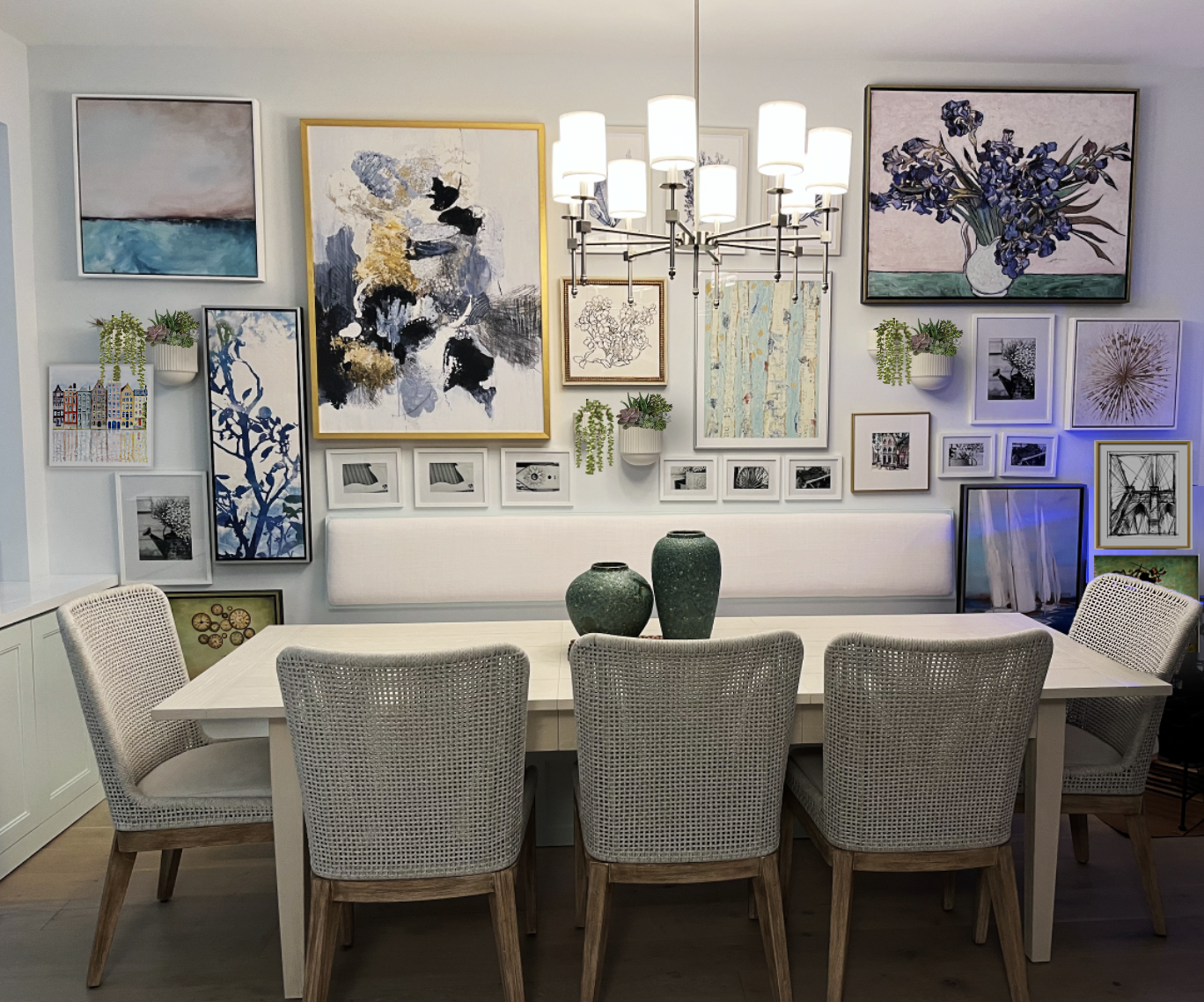
A remodeled, pale aqua, key west-inspired kitchen looks out over this cafe-inspired casual dining room with a surrounding gallery wall. This home remodel and innovative interior design was created by Exclusively to Design.
One of the most common assumptions homeowners make is that if they choose some of the furniture themselves, the designer’s work should decrease dramatically.
At first glance, that sounds logical. If the client finds the sofa, chooses the bed, or selects the dining chairs, it may seem as though a large portion of the process has already been handled. But in a well-executed residence, especially in a Miami luxury condo or South Florida home, that is rarely how the process works.
A designer does not simply pick pieces. A designer evaluates whether those pieces belong in the plan.
A client-selected item still has to be reviewed for scale, style coordination with the other elements in the space, circulation, proper function, visual weight, and how it relates to the rest of the home. It still has to be considered within the design direction of the room. It still has to support the whole, not just stand on its own.
That work does not disappear because the client found the piece first.
Why self-purchasing feels like it should save money
Many homeowners understandably assume that the design fee is largely tied to sourcing. From that perspective, if they do the shopping themselves, they believe they are removing a substantial part of the designer’s job.
But sourcing is only one portion of the process. The real value lies in filtering, editing, evaluating, and protecting the result.
That is the difference between finding a beautiful piece and building a beautiful home.
In a high-end residence, the designer is not only asking whether an item looks attractive. The designer is asking whether it fits the room properly, whether it works with the home’s proportions, whether it supports circulation, whether it competes with other elements, whether it belongs with the surrounding finishes, and whether it strengthens or weakens the final outcome.
The legwork may shift. The responsibility does not.
Final approval is still real design labor
This is where many homeowners misread the process.
They may believe they can do the searching, send the options to the designer, and ask for final approval as a quick finishing step. In reality, that approval still requires substantial design labor.
To approve a piece correctly, the designer must still evaluate its size, material specifications, the cost and delivery leadtime, its relationship to the other items in the room, to the adjoining spaces, and to the broader vision of the residence. In a larger home or luxury condominium, that review becomes even more important because one wrong piece can alter the balance of the entire composition.
A sofa that is slightly too heavy can flatten the room. Dining chairs that look appealing online can weaken the scale of the table. A bed that seemed elegant in a store can throw off the proportion of the bedroom once it is set in the space with the lighting, wall color, and other interior details.
That is why “I already picked it” does not remove the design work. It changes the path, but not the professional responsibility.
A residence is not completed one item at a time
A strong interior is not an online shopping cart.
The best home interior design does not feel complete because every individual piece is beautiful on its own. They feel complete because the decisions relate to one another. The rug supports the seating. The seating supports the scale of the room. The lighting helps shape the mood. The finishes connect from space to space. The furniture feels right not only in isolation, but in context.
That sense of continuity is what gives a home confidence.
When furniture is selected independently without a disciplined review process, the residence can begin to drift. Not always in dramatic ways. Often it is a quieter kind of drift. A room starts to feel slightly off. The proportion is not quite right. The footprint becomes clumsy. The finish tone competes instead of harmonizing. The eye feels strain even if the client cannot immediately explain why.
That is exactly what the designer is there to prevent.
When client-selected pieces can still work beautifully
Client participation is not the problem.
In many projects, homeowners have excellent instincts, meaningful existing furnishings, or pieces they genuinely love and want to keep. A strong designer can incorporate those beautifully. But that success happens because the item is evaluated within the design, not because the design has been bypassed.
The real question is not who found the piece first.
The real question is whether the piece belongs in the residence and whether it strengthens the home as a whole.
That is where professional judgment matters.
Cutting pieces out of the process does not cut the complexity out of the project. At Exclusively To Design, we aim to solve this by integrating every selection into a cohesive plan that protects scale, flow, function, and the finished result.
Explore our Portfolio for our bespoke Decorating solutions and contact us to schedule your consultation.