Why Split Purchasing Often Fails in a Luxury Interior Design Project
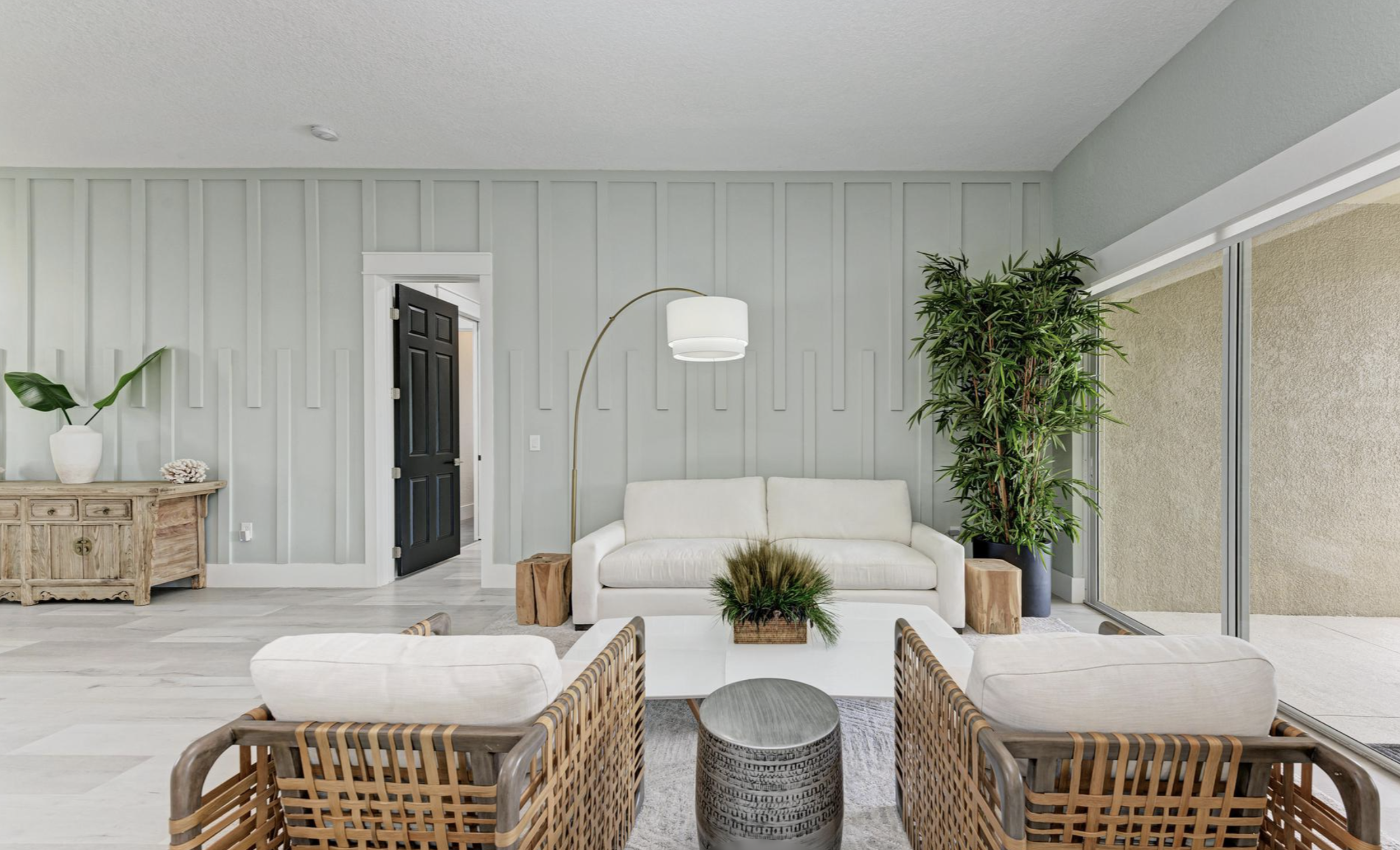
Interior design project with custom wall details, designer-selected furnishings, natural textures, and completed room styling by Exclusively To Design.
Split Purchasing Does Not Save as Much as Clients Think
When budgets feel pressured or homeowners want more control, split purchasing can sound like a smart compromise.
The client buys some pieces directly. A retail package covers others. The designer is brought in for approval, support, or finishing decisions. On paper, that structure may seem efficient. It appears to reduce fees while still preserving access to professional guidance.
In actual practice, especially in a luxury condo or larger residence, split purchasing often creates more friction than homeowners expect.
Why the strategy feels attractive in the beginning
The appeal is easy to understand.
Homeowners believe they are doing part of the legwork themselves, which should reduce the designer’s workload. They may feel that they can shop widely, compare prices, and control the process more directly. They may also assume that if the designer is still involved for approval, the project will remain protected.
But the flaw in the strategy is subtle.
Approval still requires real design work.
The designer still has to do the review
Whether a piece comes from a store, an online source, a client’s own search, or the designer’s sourcing process, it still has to be evaluated through the same professional lens.
Does it fit the room? Does it work with circulation? Does the finish support the overall direction? Is the quality correct for the residence? Does it weaken continuity from room to room? Will it force adjustments elsewhere? Is it proportionally right once the entire space is considered?
If the answer is no, then the designer still has to solve the problem.
So although the purchasing path may be divided, the design responsibility is not.
Where split sourcing starts to create friction
The first problem is inconsistency.
The overall design begins from an decentralized point of view. The second problem is that this “mixed salad” approach creates mistakes and confusion, causing delays. Multiple points of view, sourcing from various vendors make the design’s continuity harder to maintain, organize and elevate the space. The third problem is revisions and lack of oversight. When various items are being selected for the same placement, a design starts to design take on another direction. An item that felt exciting initially may prove to be the wrong size, style, comfort level, or fabrication once the rest of the room evolves, causing a revision.
This is why projects that focuses on cost-efficiency over strategy from the start often become more complicated as they move forward.
The gaps do not always show up immediately. They tend to accumulate as piecemeal items are incorporated-— creating an ever-changing design plan.
Why the expected savings often disappear
Homeowners usually focus on what they believe they are saving in design fees. If a designer passes them their designer discount, that is a large savings against the designer’s fee. The trade discount is not obligatory and is often not passed to the client without some admin fee to cover the costs of managing the order and deliveries.
What clients often miss is what they may spend later in corrections, replacements, lost continuity, added time, and decision fatigue. A piece that needs to be replaced can create more work than a piece that was properly integrated into the overall design from the beginning. A project that loses its direction can become slower and more stressful, not less. This is especially true in luxury residences where the standard is premium and the Interior Design solutions are more exposed to scrutiny due to a highly competitive marketplace in Miami.
Luxury interiors do not fall short because one thing went wrong. They fall short because too many disconnected decisions were allowed into the home without a single disciplined review process.
Client involvement is not the issue
The issue is not whether clients should participate.
They should.
Many clients bring valuable instincts, strong preferences, or pieces worth keeping. The issue is whether the project still has one clear design direction and one clear standard for approval.
Without that, the home becomes vulnerable to drift.
And drift is expensive. It is much better to the design project and a client’s budget is to trust the designer’s expertise to give you the design plan and presentation first. When the foundation is set, a client’s requests, updates and changes can be integrated more cleanly.
Partial scope often creates full-scale problems.
At Exclusively To Design, we aim to solve this by preserving continuity from the first major decision to the final finishing touch so the residence performs as a whole.
Explore our portfolio representing our expertise in Interior Design, Remodeling and Decorating in Miami & South Florida.
Contact us and schedule a consultation.